Offering healthier snacks does not mean filling a machine with unfamiliar products and hoping people buy them. The options most likely to work are practical, familiar and suited to the people using the machine.
For facility managers, schools and workplaces, the aim is to make better choices easy to find while keeping enough variety to maintain interest. Here’s how to build a range of healthy snacks for vending machines that people are more likely to choose.
Why offer healthier vending options?
A vending machine is part of the everyday food environment. In a workplace, it can offer staff convenient alternatives during a busy day. In a school, it needs to fit the setting’s food policy and applicable standards. In hospitals, hotels and leisure sites, a balanced range can serve visitors as well as staff.
It is also important to keep expectations realistic. “Healthy” does not automatically mean popular, and no single product range will work everywhere. The best starting point is to offer recognisable products in more nutritious formats, then adjust the selection based on what customers actually buy.
There is evidence this can work. In a 2025 Food Standards Agency pilot, one site replaced products with similar, lower-calorie alternatives. Average calories and sugar per item sold fell, while sales and revenue were not negatively affected. Other pilot sites had more mixed results, which underlines the importance of product choice and planning.

Healthy snacks for vending machines: categories to consider
1. Baked or lower-fat crisps
Crisps are familiar and easy to eat on the go, so they can be a sensible place to start. Consider baked or lower-fat versions, smaller packs, or other savoury snacks with a similar format and price point.
Check the nutrition information for the whole pack, not just per 100g. Products marketed as “baked” or “lighter” can still vary in calories, salt and fat.
2. Nuts and seeds
Single-serve packs of nuts or seeds can add variety and provide a filling savoury option. Plain or lightly seasoned products are often a straightforward choice.
Always check site requirements and allergen information before adding nuts. Some schools and workplaces have policies that restrict them.
3. Protein and cereal bars
Bars are portable and convenient, but the word “protein” does not automatically mean a product is a healthier choice. Compare the full pack’s calories, sugar, saturated fat and portion size. Some protein bars are large, high in calories or more expensive than customers expect.
Lower-sugar cereal or oat bars can provide another familiar option. Try a small selection first rather than giving several machine rows to one type of bar.
4. Dried and whole fruit
Dried fruit is easy to stock in single portions and can bring a fruit option to an ambient snack machine. Because it is concentrated, check the portion size and sugar information.
Whole fruit can work well where customers will buy it and the machine is suitable for keeping it fresh. It may require chilled storage and closer stock rotation, so plan the range around expected demand.
5. Popcorn and rice cakes
Plain or lightly flavoured popcorn offers a familiar snack in a different format. Rice cakes can be a lighter alternative to some crisps, although flavour and texture matter: test a few varieties to see what people prefer.
Other options to consider include wholegrain crackers, breadsticks and small savoury snack packs.
6. Water and lower-sugar drinks
A healthier vending range is not just about food. Water is a useful everyday option, while sugar-free or lower-sugar drinks can offer an alternative to full-sugar varieties. Check the product label and any applicable site guidance rather than relying on front-of-pack claims alone.
The FSA’s healthier and more sustainable vending guidance includes practical recommendations for food and drink ranges.
How to balance the machine so it stays popular
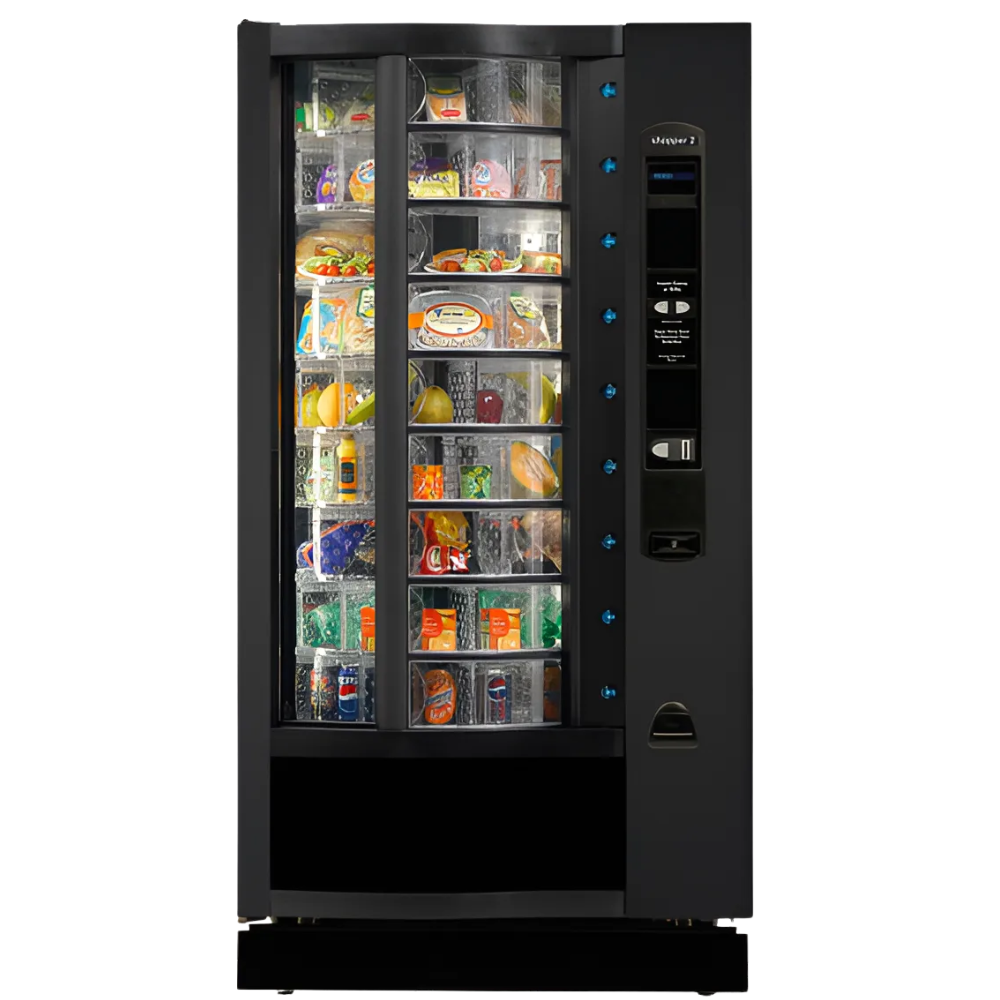
A healthy range should be easy to spot and varied enough to suit different tastes. If every slot is given to unfamiliar products, people may stop buying from the machine. If healthier options are hidden at the bottom or squeezed into one row, customers may not notice them.
Use these steps to get the balance right:
- Keep familiar formats. Offer lower-calorie or lower-sugar alternatives alongside the snack types people already buy.
- Make healthier options visible. Place a selection at eye level and in central rows, rather than grouping every alternative in a hard-to-see corner.
- Offer variety without overloading the range. A mix of savoury snacks, bars, fruit-based options and drinks gives people a choice without filling the machine with slow-moving lines.
- Match the site. A school, office, hospital and leisure centre will have different customers, schedules and requirements.
- Check portions and prices. Compare the size and cost of alternatives with familiar products. A much larger or more expensive bar may not work as an everyday replacement.
- Review sales and stock levels. Keep reliable sellers available, rotate slow-moving lines and trial new options in a small number of slots before expanding them.
For schools in England, check the current school food standards and your school’s own policy before deciding what can be stocked. Requirements can depend on the setting and the food being provided. If you manage a school site, confirm the proposed range with the relevant school contact before installation or restocking.
Make changes gradually, then learn from sales
A small trial is usually more useful than a complete change to the range. Start with a handful of alternatives in popular categories, then review how they perform over several restocking visits.
Look at:
- Which products sell consistently
- Which lines remain in the machine
- Whether customers are choosing the alternatives
- Whether price, pack size or flavour may be affecting demand
- Whether any site policies or allergy requirements need to be addressed
The FSA pilot found that a successful change used products similar in type and appeal to the original choices. Other sites had more difficulties when replacements felt less familiar or did not suit customer expectations. The practical takeaway is simple: make changes thoughtfully, keep some variety, and use feedback and sales patterns to guide the next step.
How Exact Vending can help
Exact Vending supplies, restocks and maintains snack and drink machines on a Nil Cost, Free On Loan basis. That means eligible host sites do not pay an upfront cost for the machine. We manage installation, regular restocking and ongoing maintenance as part of the service.
We can discuss a tailored product range for your site, whether you manage a workplace, school, hospital, hotel or leisure facility. We serve customers across Birmingham, Coventry and the wider Midlands.
Explore our vending machine services or learn more about free vending machines. If you want to improve the range in your existing machine, we can talk through suitable options for your location and customers.
A practical approach to healthier vending
Healthy vending works best when the range is convenient, familiar and suited to the people using it. Start with practical alternatives such as baked crisps, popcorn, portioned nuts, bars, fruit and water. Keep products visible, check nutrition and allergens, and review how the range performs over time.
There is no universal list of bestsellers. A site-specific range, reviewed regularly, is more likely to offer useful choice without leaving the machine half-empty.